

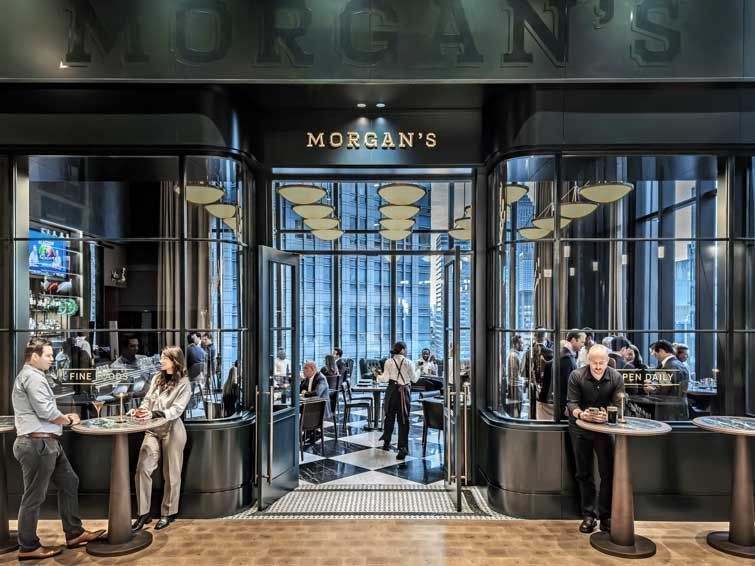
In an era where workplace environments are evolving beyond traditional office layouts, Morgan’s at JPMorganChase’s global headquarters in New York City stands out as a compelling example of hospitality-driven corporate architecture. Designed by STUDIOS Architecture in collaboration with Danny Meyer’s Union Square Hospitality Group, the project transforms the familiar warmth of an Irish pub into a sophisticated workplace destination within one of Manhattan’s most prominent skyscrapers.
Located 13 floors above Madison Avenue, Morgan’s introduces a more intimate and socially engaging atmosphere inside a large-scale corporate environment. The 55-seat venue combines panoramic skyline views with carefully curated interiors, creating a setting that contrasts with the scale and formality often associated with high-rise headquarters.

Blending Hospitality and Workplace Design
The project reflects a growing trend in workplace architecture where hospitality principles are integrated into office environments to improve employee experience and foster collaboration. Rather than replicating a conventional corporate lounge, the design team focused on reinterpreting the character and familiarity of a traditional Irish pub through contemporary architectural language.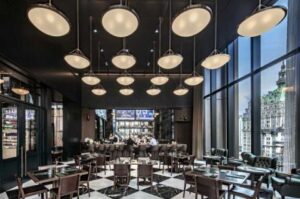
Working alongside Union Square Hospitality Group, STUDIOS Architecture developed a space that balances openness with intimacy. Enlarged storefront-style elements improve transparency and visual connectivity, while custom furnishings, warm finishes, and carefully selected materials help create a welcoming and personal environment.
This design strategy demonstrates how hospitality-inspired spaces can strengthen social interaction and emotional connection within modern workplaces.
Addressing the Challenge of Scale and Intimacy
One of the primary architectural challenges involved creating a sense of closeness within a large corporate tower. The designers approached this by scaling architectural elements thoughtfully and introducing details that encourage comfort and familiarity.
Furniture layouts, lighting, textures, and spatial proportions were carefully coordinated to ensure the venue felt approachable rather than overly formal or institutional. The result is a space that supports informal meetings, social gatherings, and employee engagement while maintaining a refined aesthetic aligned with JPMorganChase’s global headquarters.
The project highlights how architecture and interior design can influence workplace culture by creating environments that prioritize human experience.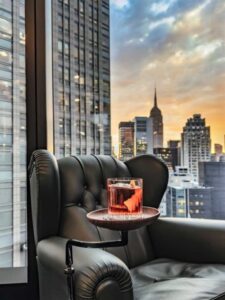
A New Perspective on Corporate Amenities
Morgan’s also reflects the broader evolution of corporate amenities in modern office developments. Increasingly, organizations are investing in hospitality-focused environments that support employee wellbeing, collaboration, and workplace satisfaction.
By integrating a pub-inspired concept into a high-rise office tower, the project challenges conventional ideas of workplace programming. It demonstrates how recognizable social typologies can be adapted into professional settings without losing their warmth or authenticity.
The panoramic New York City views further enhance the experience, offering employees and visitors a distinct destination within the headquarters.
Strategic Significance for Future Workplace Design
As companies continue rethinking office environments in response to changing workforce expectations, projects like Morgan’s provide insight into the future of corporate architecture. The integration of hospitality, social interaction, and human-centered design principles is becoming increasingly important in attracting talent and fostering stronger workplace communities.
Morgan’s at JPMorganChase HQ illustrates how architecture can move beyond functionality to create emotional and experiential value. Through the collaboration between STUDIOS Architecture and Union Square Hospitality Group, the project successfully bridges the worlds of hospitality and corporate design, delivering a workplace environment that feels both elevated and deeply personal.

 Share your work with Architecture Pulse. Upload your PDF below.