

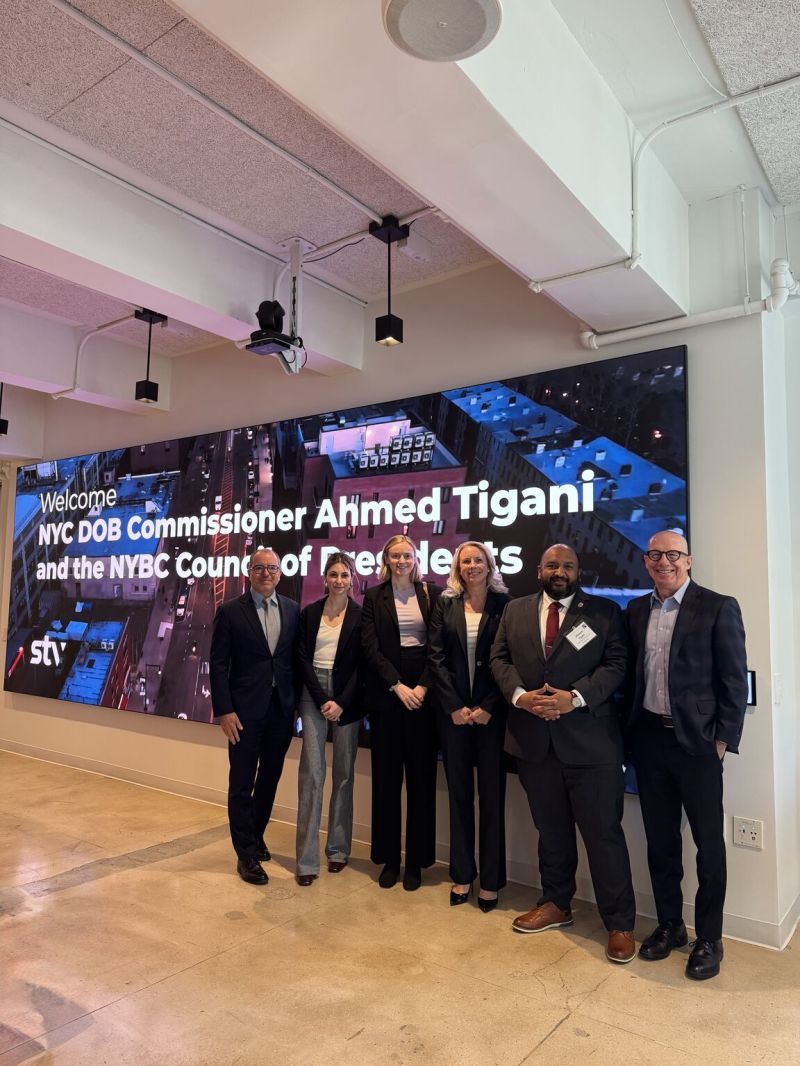
STV recently hosted a strategic industry dialogue featuring Ahmed Tigani alongside members of the New York Building Congress Council of Presidents to discuss the future of New York City’s built environment.
The gathering brought together leaders from across the architecture, engineering, and construction (AEC) sectors to examine key challenges and opportunities shaping the city’s urban future. Discussions focused on housing priorities, safety initiatives, infrastructure modernization, and long-term planning strategies required to support resilient and sustainable city growth.

Collaboration Between Public Agencies and Industry
The event highlighted the increasing importance of collaboration between government agencies and private-sector industry leaders in addressing complex urban development challenges. As New York City continues facing pressures related to housing demand, aging infrastructure, and climate resilience, coordinated planning efforts are becoming critical to future development strategies.
Commissioner Ahmed Tigani and participating industry executives discussed how regulatory frameworks, engineering innovation, and construction practices must evolve together to support safer and more efficient urban environments. The dialogue also emphasized the role of public-private partnerships in accelerating infrastructure projects and improving citywide development outcomes.
Industry observers note that collaborative forums such as these are increasingly important as cities pursue integrated approaches to transportation, housing, sustainability, and economic development.
Focus on Housing, Safety, and Urban Resilience
Among the central themes discussed were housing accessibility, building safety standards, and the long-term resilience of New York’s urban infrastructure. With cities worldwide adapting to changing population patterns, environmental pressures, and technological transformation, the AEC industry is playing an increasingly strategic role in shaping future urban ecosystems.
Participants also explored how innovation in architecture, engineering, and construction can contribute to more sustainable and inclusive communities. Topics such as smart infrastructure, adaptive building systems, and modernized city planning frameworks continue influencing how major metropolitan areas approach urban growth.
The conversation reinforced the need for integrated planning models that align public policy with practical implementation across infrastructure and real estate sectors.
New York’s Built Environment Entering a New Phase
New York City remains one of the world’s most influential urban centers, making its infrastructure and development strategies highly significant for the global AEC industry. Ongoing investments in transportation, commercial development, housing, and climate adaptation are reshaping the city’s architectural and engineering landscape.
Organizations such as STV and the New York Building Congress continue to play an important role in facilitating dialogue between policymakers, developers, engineers, architects, and construction leaders. These discussions help align long-term urban priorities with industry capabilities and technological advancements.
As cities increasingly focus on sustainability, resilience, and livability, strategic industry engagement is expected to remain essential in guiding infrastructure policy and development decisions.

 Share your work with Architecture Pulse. Upload your PDF below.