

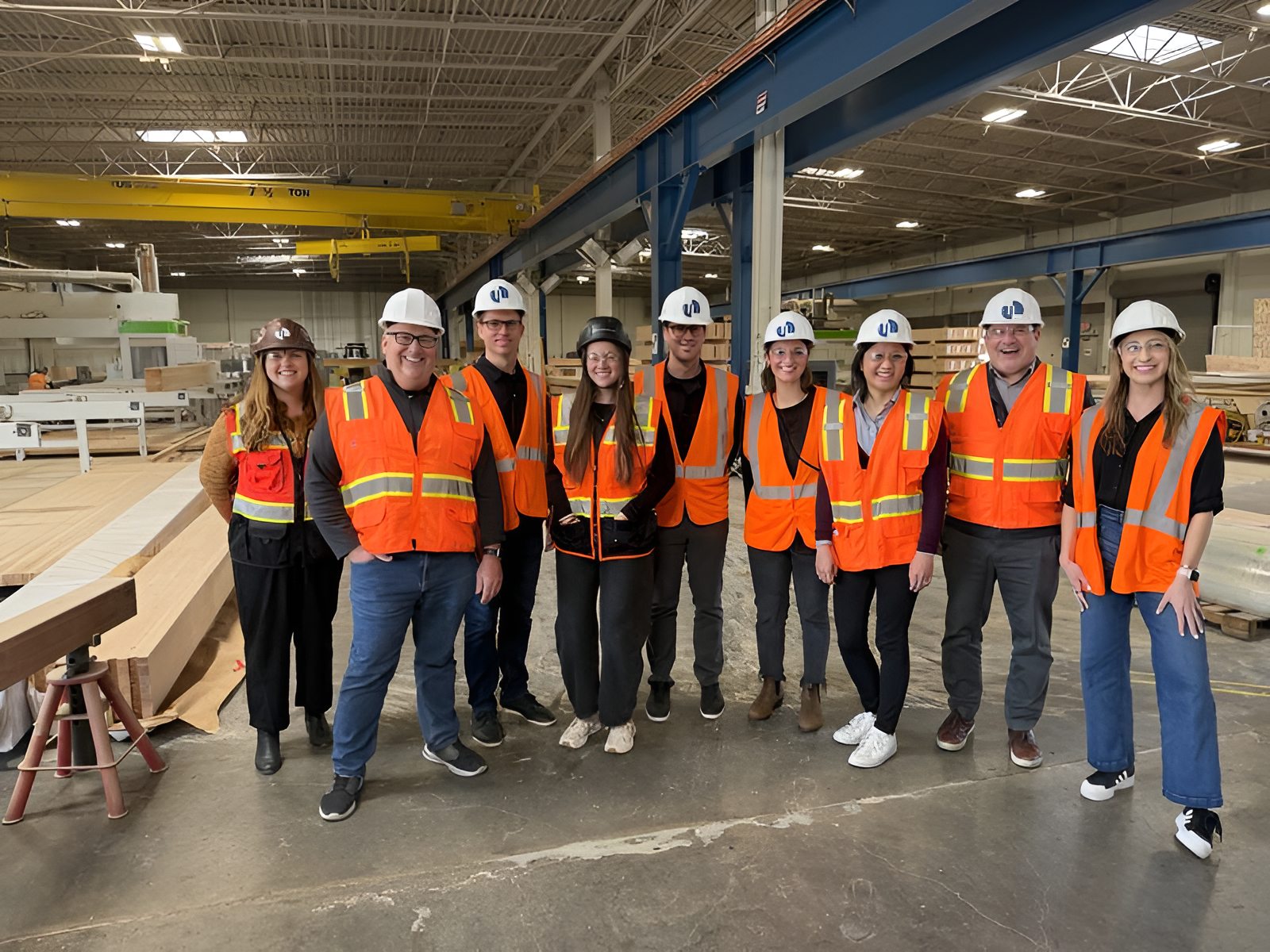
A recent collaborative visit to a mass timber fabrication facility in Portland brought together teams from Swinerton, Timberlab, DLR Group and Buehler to explore the production process behind one of the fastest-growing materials in sustainable construction. The visit focused on preparations for the upcoming De Anza College Creative Arts Building project, which is expected to become one of the first mass timber community college buildings in Northern California.
Industry Collaboration Around Mass Timber
The tour offered project partners a detailed look at Timberlab’s fabrication operations, where mass timber components are manufactured before being transported to construction sites. The hands-on experience allowed engineers, architects and construction specialists to better understand how design plans translate into fabricated structural components.

Such collaborative visits are increasingly common as project teams seek deeper integration between design and construction phases. By observing the fabrication process directly, stakeholders can refine building strategies, improve coordination and optimize the structural performance of timber-based systems.
Advancing the De Anza College Creative Arts Building
The visit holds particular importance for the development of the De Anza College Creative Arts Building, a project that is expected to showcase innovative sustainable construction methods in higher education architecture.
Located in Northern California, the facility aims to demonstrate how mass timber can support large-scale educational infrastructure while reducing the environmental impact of traditional building materials. As construction planning advances, the project partners are continuing to refine design and fabrication strategies to ensure seamless integration during the building phase.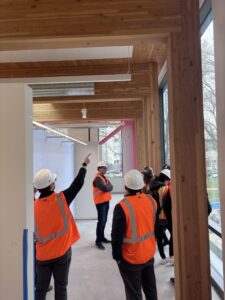
Mass Timber’s Role in Sustainable Construction
Mass timber has rapidly gained attention as a lower-carbon alternative to steel and concrete in modern construction. Engineered wood products such as cross-laminated timber allow buildings to maintain structural strength while significantly reducing embodied carbon.
For universities and colleges pursuing sustainability goals, the material provides a pathway toward greener campus development. Institutions across the United States are increasingly incorporating mass timber into academic buildings, research facilities and student spaces to meet ambitious climate and sustainability targets.
Growing Adoption in Higher Education Architecture
Projects like the De Anza College Creative Arts Building highlight a broader shift toward sustainable campus design. Educational institutions are exploring innovative materials and construction approaches that combine architectural performance with environmental responsibility.
As mass timber technology advances and fabrication capabilities expand, collaborations between architects, engineers and manufacturers will play a key role in shaping the next generation of resilient, low-carbon educational facilities.

 Share your work with Architecture Pulse. Upload your PDF below.