

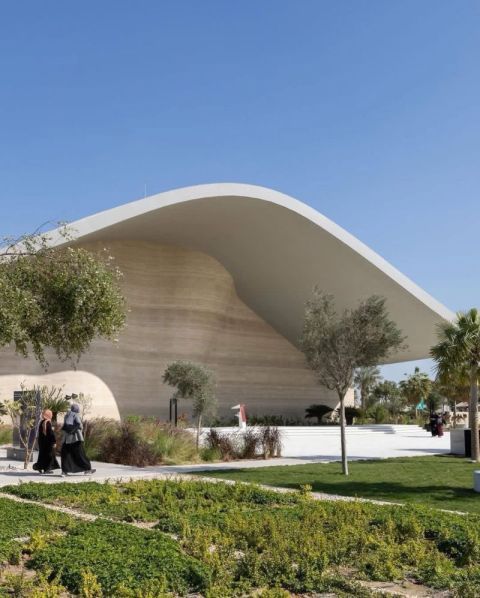
Al-Mujadilah Center and Mosque for Women is emerging as a defining example of contemporary Islamic architecture and inclusive cultural design following its completion in 2024 within Education City. Designed by Diller Scofidio + Renfro and highlighted by ParametricArchitecture, the project is recognized as the first purpose-built contemporary mosque dedicated exclusively to women in the Muslim world.
Commissioned by Sheikha Moza bint Nasser, the 50,000-square-foot development was envisioned as more than a religious facility, combining worship, scholarship, education, and public dialogue within a single architectural environment.

Contemporary Design Rooted in Islamic Tradition
The mosque’s architecture reinterprets traditional Islamic spatial concepts through a contemporary design language that emphasizes light, geometry, and openness. The prayer hall is carefully oriented toward Mecca and features a dramatic roofscape punctuated by more than 5,000 light wells that diffuse natural sunlight throughout the interior.
The filtered illumination creates a contemplative atmosphere while reinforcing the spiritual and symbolic dimensions of the space. The design balances modern construction techniques with references to historical Islamic architecture, creating an environment that is both culturally grounded and architecturally progressive.
A prominent feature of the project is its tensile steel minaret, wrapped in a mashrabiya-inspired mesh structure. The reinterpretation of the traditional mashrabiya pattern introduces a contemporary visual identity while preserving links to regional architectural heritage.
Educational and Cultural Mission Beyond Worship
In addition to its religious function, the Al-Mujadilah Center serves as a platform for education, scholarship, and intellectual exchange. The complex includes a library containing more than 8,000 books focused on Islamic studies and women’s scholarship, reinforcing its broader cultural mission.
The project was designed to encourage dialogue and community engagement while expanding opportunities for women-centered learning and spiritual development within the Islamic world. Its multifunctional approach reflects changing expectations around the role of religious institutions in contemporary urban environments.
Architectural observers note that the integration of worship, research, and cultural programming positions the center as a hybrid civic and spiritual institution rather than a conventional mosque complex.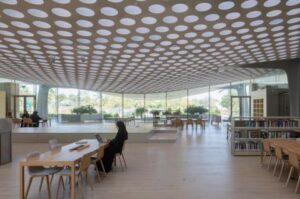
Redefining Religious Architecture in Contemporary Cities
The Al-Mujadilah Center reflects a broader global movement toward reimagining religious architecture as inclusive, educational, and socially connected public infrastructure. Across contemporary architecture, designers are increasingly exploring how sacred spaces can evolve while preserving cultural identity and symbolic meaning.
The project also highlights how modern architectural technologies and parametric design principles can be applied to reinterpret traditional forms without disconnecting from historical context. Through its combination of symbolism, spatial experience, and social purpose, the mosque demonstrates how architecture can bridge heritage and innovation.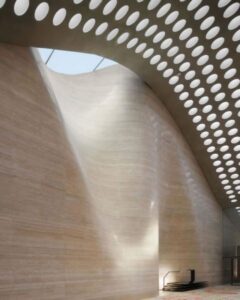
Located within Education City, one of Qatar’s major academic and cultural districts, the development contributes to Doha’s growing reputation as a center for ambitious architectural experimentation and cultural investment.
Strategic Importance for Cultural and Architectural Discourse
As discussions surrounding inclusivity, cultural representation, and urban identity continue shaping global architecture, projects like the Al-Mujadilah Center are gaining international attention for their social and symbolic significance.
The mosque represents a notable milestone in contemporary Islamic architecture by creating a purpose-built environment dedicated to women while simultaneously advancing new approaches to cultural and religious design. Its completion reinforces the evolving role of architecture in shaping civic dialogue, spiritual engagement, and educational accessibility within modern cities.

 Share your work with Architecture Pulse. Upload your PDF below.